Rhythm and how it moves the body
Zanvi Kpo settles into a steady 88 BPM from its first phrase. That tempo gives the song a measured, deliberate gait: not hurried, not languid, but a contained sway. The pulse is regular enough to nod your head or rock in a chair, yet slow enough that the voice can stretch syllables and let sentences finish in the space between beats.
Because many vocal lines are allowed to end into silence, the rhythm doesn’t simply drive motion — it shapes attention. Listeners respond as much to the pauses as to the downbeat: a fingertip tap, a shoulder shift, a tiny lean forward to catch the next line. The effect is inward rather than outward; the body moves with the story.
Instruments and what they do in the music
Nylon palm‑wine guitar
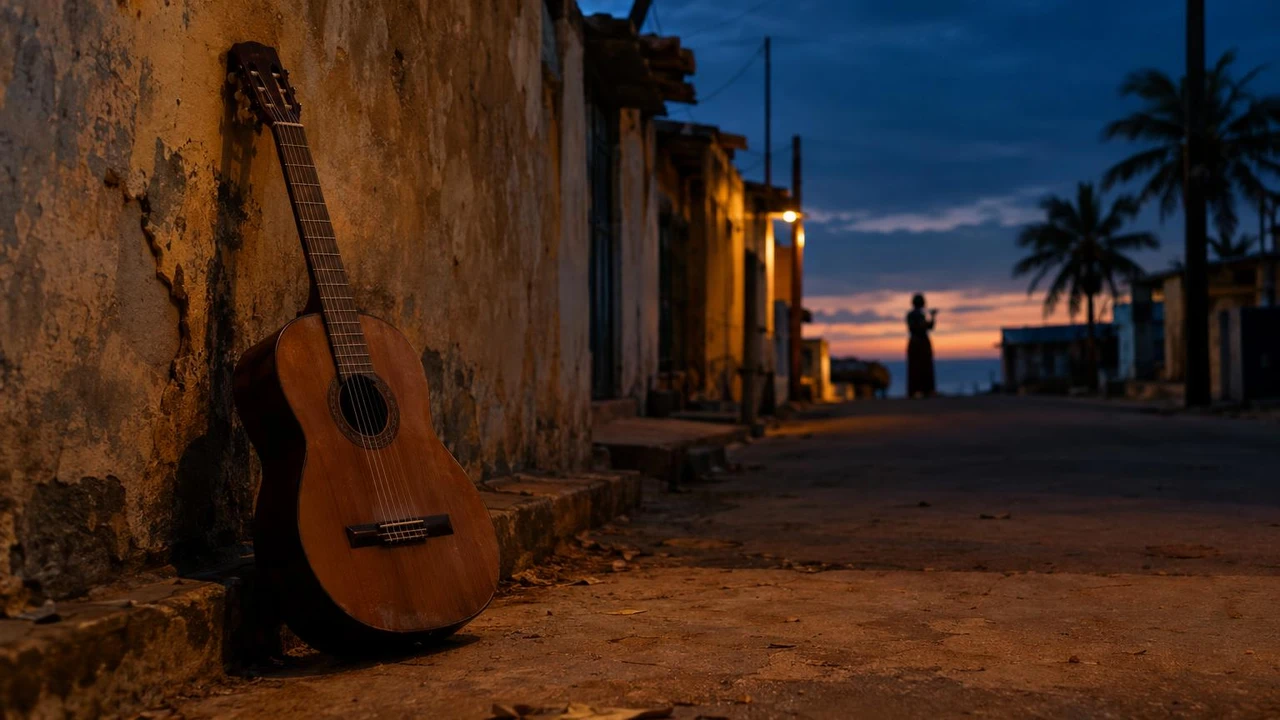
A picked nylon‑string guitar carries the core of the track. Its pattern outlines harmony and sets the tempo while offering brief, conversational ornaments that answer the singer. The nylon tone keeps the texture warm and intimate; when the guitar replies it does so like a companion speaking softly back, not an accompanist filling space.
Percussion and low register
Percussion is spare: small shakers mark subdivisions and keep the 88 BPM articulated without force. There’s also a subtle low register that fills the bottom of the mix—more a soft cushion than a driving bassline. These light elements gain weight precisely because they arrive inside the silences, emphasizing the gaps rather than covering them.
Language: Fon and recurring French refrains
The main narrative unfolds in Fon. Those extended Fon lines carry detail and memory; the phrasing is expansive and spoken-sung, letting meaning land before the guitar answers. Fon’s cadence here creates long, unbroken storytelling arcs that the arrangement respects.
French appears in short, recurring refrains. These fragments don’t move the story forward so much as punctuate it—repeated echoes that shift tone and recall certain images. The interplay becomes a structural device: Fon for the unfolding tale, French for the repeated emotional marker.
Region and tradition
This is an intimate Beninese ballad rooted in the palm‑wine guitar strand of coastal West Africa. The picked nylon guitar, the narrative vocal approach in Fon, and the restrained percussion place the song in a local practice where small, guitar-led pieces serve as vehicles for personal and urban storytelling. A related title, Alèkè Gbè, shares language and stylistic touchpoints, placing Zanvi Kpo within a thread of Beninese songs that treat memory and everyday streetscapes with careful restraint.
Energy and who it is for
The track’s energy is quiet and concentrated. Its mood is melancholic and reflective: it demands focused listening rather than background play. This is music for late-night headphones or a single chair in a sunlit room, for listeners who want words to land and small guitar replies to register. The emotional weight sits in tiny gestures—the guitar’s brief answers, a shaker’s tick, and the breath-sized silences that let each line settle.
Benin Palm-Wine Music
Benin Palm-Wine Music names the guitar-centered, narrative strand of coastal West African palm-wine practice. It occupies a place in African music where spare, acoustic songs carry personal storytelling and fed into later urban forms such as Highlife.
Origins and development
The style grew around palm-wine bars and coastal social gatherings where traveling players introduced fingerpicked guitar into local song forms. Coastal exchange folded European guitar techniques into indigenous vocal traditions, creating a relaxed, conversational performance format shared across Benin and neighboring pockets.
Defining musical traits
Tempo is slow-to-mid, favoring a measured pulse over dance drive. A picked nylon or steel guitar supplies rhythm, harmony and brief melodic answers; drums are light or absent, replaced by shakers and small hand percussion. Bass sits low and subtle. Vocals lead the narrative, often conversational with short refrains or call-and-response moments.
How this track fits
This recording moves at a steady 88 BPM with a picked nylon palm‑wine guitar carrying both rhythm and answering ornaments. Sparse shakers mark subdivisions while a soft low register tucks under the mix. A lead Fon storyteller delivers long narrative lines, with recurring short French refrains as musical punctuation; breath-sized silences and small guitar replies keep the arrangement intimate and melancholic.
Styles to explore next
West African Highlife; Acoustic West African Folk