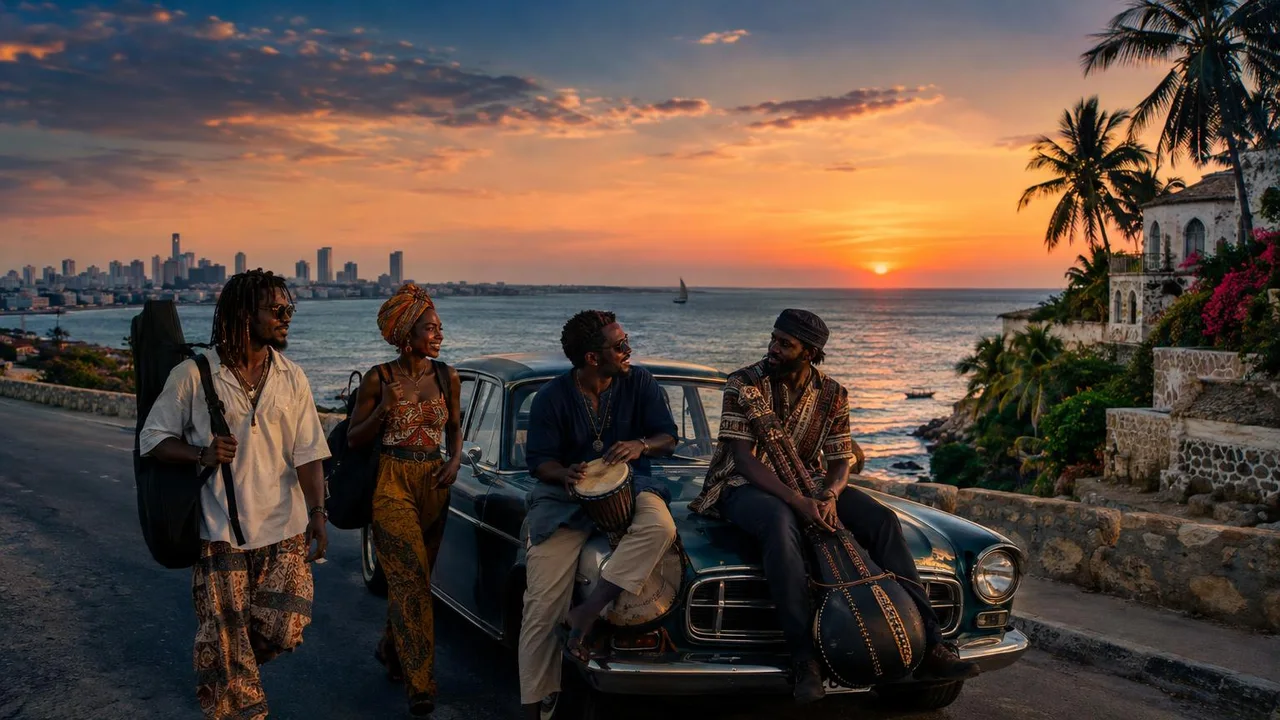
Rhythm and how it moves the body
The track sits at 107 BPM, a tempo that keeps the music moving without urgency—more a steady drive than a sprint. That pulse lets vocal lines breathe: call-and-response passages lean into the spaces between beats, while the rhythm carries a relaxed forward motion that feels like highway light and late-afternoon sun.
The beat isn’t meant to force feet into frantic movement. Instead it suggests measured steps and long stretches of road, a pace that invites conversation and reflection as much as dancing.
Instruments and sound textures
Bass and synths
A groovy, light house bass underpins the whole piece, giving weight to the low end without dominating. Airy synth pads sit above it, creating a horizon-like openness—there’s room in the arrangement for the languages to travel across the stereo field.
Guitars, percussion and vocals
Subtle guitars weave around the vocal phrases, more textural than soloistic. Percussion takes cues from East African club rhythms: soft Bongo Flava and Singeli-influenced patterns add propulsion while remaining delicate. Organic backing vocals cushion lead lines, offering harmonic warmth rather than grand flourishes.
Language as map and conversation
Wolof and Swahili are the song’s navigation system. Wolof frames departure—intimate, near-microphone spoken-chant moments—while Swahili names arrival, carrying the sense of place forward. The two languages answer each other across the groove, acting like call-and-response markers that mark stages of the journey.
Short French refrains appear as brief memory markers between those passages. They punctuate rather than narrate, functioning like roadside signposts or flashes of recollection that interrupt and reorient the conversation.
Region, tradition and musical references
The route is explicit: Dakar to Zanzibar—Senegal’s Atlantic coast to Tanzania’s Indian Ocean islands. That geographic span is reflected in the sonic palette: rhythmic nods toward Bongo Flava and Singeli rhythms sit alongside elements associated with West African contemporary pop, creating a cross-coastal sonic handshake.
Instrumentation and percussive choices point to migration and exchange; textures that feel modern and electronic coexist with organic backing vocals and guitar, suggesting music that travels both digitally and by word of mouth.
Energy and who it is for
Energy here is warm, dreamy and resilient. The track positions itself as a road song of hope: steady, contained optimism rather than euphoric release. It fits travel edits, playlists that foreground storytelling, and listeners who value multilingual songwriting that foregrounds place.
Presented by the artist as an AfroFusion road song, the piece uses tempo, layered harmonies and language strategy to make travel audible—the experience of moving between coasts, languages and memories rendered as a measured groove.
AfroFusion Road Song
AfroFusion is the style name attached to this track and occupies a visible place in contemporary African music as a cross‑pollination of regional popular forms with global production. Here it functions as a road song that links West and East Africa through language and groove.
AfroFusion Origins
AfroFusion emerged as a descriptive tag for contemporary African popular music that blends regional genres with international pop, electronic and dance aesthetics. It is not a single tradition but a meeting point that frequently borrows from Afrobeats, Alté, Bongo Flava and Afrohouse approaches, privileging hybrid production and multilingual singing.
Defining musical traits
On this recording the pulse is explicit: the song runs at 107 BPM, a mid‑tempo drive that sits between steady motion and relaxed glide. Production favours layered harmonies, airy synths, subtle guitars and a groovy, light house bass; percussion here leans on soft Bongo Flava/Singeli‑influenced patterns and organic backing vocals. Vocally the piece uses multilingual interplay rather than a single lead language.
How this track fits the style
The track is an AfroFusion road song tracing a young traveller from Dakar to Zanzibar. Wolof supplies intimate spoken‑chant passages that serve as a departure, Swahili carries verses that name arrival, and short French refrains act as memory markers between them. Arrangements — airy synths, subtle guitars, layered backing vocals, groovy light bass and soft, Bongo Flava/Singeli‑tinged percussion — steer the song toward warm, dreamy resilience at 107 BPM.
Neighbouring styles
Bongo Flava, Afrohouse