Slow, walking pulse
Zanvi Kpo sits at 88 beats per minute — the speed of a deliberate step rather than a dance sprint. That measured tempo gives the singer room to stretch phrases, to let images arrive one by one. The rhythm doesn’t shove the body; it invites a reflective sway, the kind of small back‑and‑forth movement you make when listening to someone telling a long, personal story. Because the beat is steady and unhurried, each vocal line lands with clarity and the pauses between phrases feel intentional, like turning a page.
Instruments and their roles
Guitar
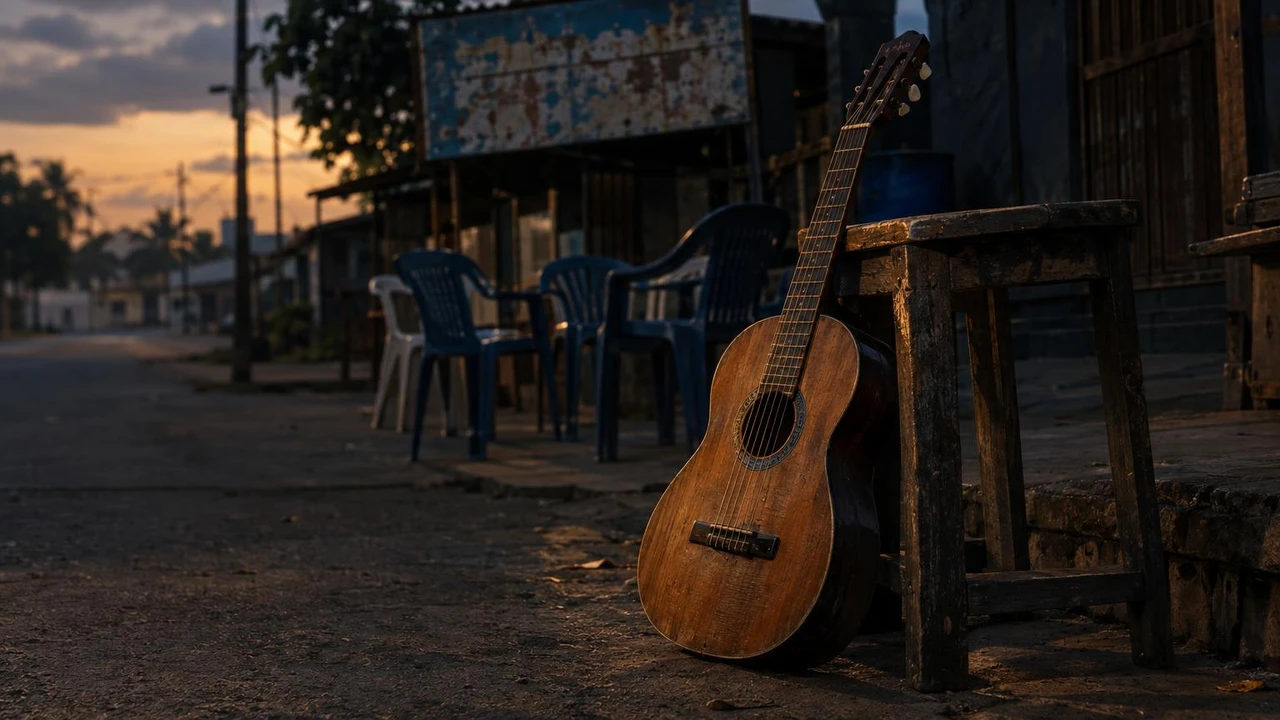
A nylon‑string palm‑wine guitar leads. Its fingered patterns are spare and articulate, sketching harmony and open space more than dense chordal blocks. The nylon tone is warm and slightly rounded; it frames the voice rather than competing with it. The guitar’s lines often breathe around the singer — short rhythmic fills or single bass‑adjacent notes that point the ear toward the next phrase.
Percussion and bass
Shakers provide a faint, continuous filigree: a soft abrasion against the guitar’s woodiness that keeps time without ever dominating. The bass is restrained, felt more than heard, anchoring the low end so the guitar and voice can float. Together they create an acoustic cradle — light, tactile, and spacious.
Fon voice: long narrative lines
The lead vocal is in Fon and it unfolds in extended, conversational passages. These long lines carry the song’s narrative weight—memories of youth, friends and streets that linger in the throat of the singer. Fon’s cadence here stretches syllables into images; sentences stack, allowing a storyteller’s details to accumulate. For listeners who speak Fon the effect is like being addressed directly: the voice guides you through memory with patient insistence, each line building onto the next.
French refrains as memory marks
Short refrains in French punctuate the Fon narration. They arrive compact and repeatable — easy to hold in the mind when they appear. These refrains function less as translations and more as recurring landmarks: moments the ear can return to between longer Fon passages. Because they are concise, the French phrases register quickly for francophone listeners, providing familiar hooks that sit alongside the unfolding Fon narrative rather than replacing it.
Region, tradition and listeners
The arrangement’s acoustic minimalism places storytelling at the centre, a hallmark of intimate coastal performance traditions where guitars and voices shaped social exchange. The energy is conversational and private: not aimed at stadium projection but at close listening. In practice that produces layered listening experiences — Fon speakers follow the narrative arc closely, while francophone listeners grasp the recurring refrains and the mood they carve out. The result is music that asks for attention: slow enough to notice how a single repeated line can change meaning depending on the language that surrounds it.
Benin Palm-Wine Music
Benin Palm-Wine Music is a strand of West African palm‑wine guitar tradition where intimate, acoustic performance carries local stories. It sits in African music as a guitar‑forward idiom that privileges conversational singing and close‑mic, small‑ensemble textures.
Origins and development
Palm‑wine styles grew along West Africa’s coast in informal social spaces—bars, street corners and small gatherings—where imported guitars were adapted into local rhythmic and melodic practice. Traveling players and local communities spread the idiom across languages, turning the nylon guitar into a portable vehicle for storytelling and social comment.
Defining musical traits
Tempo typically sits between roughly 70–100 BPM, often relaxed and mid‑tempo. Guitar is nylon‑string and fingered, outlining harmony with syncopated, open patterns. Percussion is light—shakers, calabash or hand percussion—while bass stays subtle and supportive. Vocals lead with extended narrative lines, sometimes punctuated by short refrains or responses.
How this track fits
Zanvi Kpo works squarely in that frame: a nylon palm‑wine guitar leads at 88 BPM, its gentle fingered patterns making space rather than filling it. Light shakers add a soft, steady filigree; a subtle bass underpins the low end. A lead Fon voice unfolds long narrative lines about lost youth while short French refrains return as clear memory marks, producing an intimate, conversational pacing that keeps the arrangement spare and immediate.
Styles to explore next
Highlife; Soukous