A patient pulse that invites slow motion
The track sits at 72 beats per minute, a tempo that deliberately stretches time. Notes hang; vowels are elongated until syllables feel like inhalations. That measured heartbeat makes each phrase arrival matter: entrances are gentle, rests substantial, and short motifs become anchors for reflection rather than propulsion. The body answers not with a brisk step but with a slow bow of the head, a subtle sway, small movements that match the music’s devotional gait.
The choir as the instrument of address
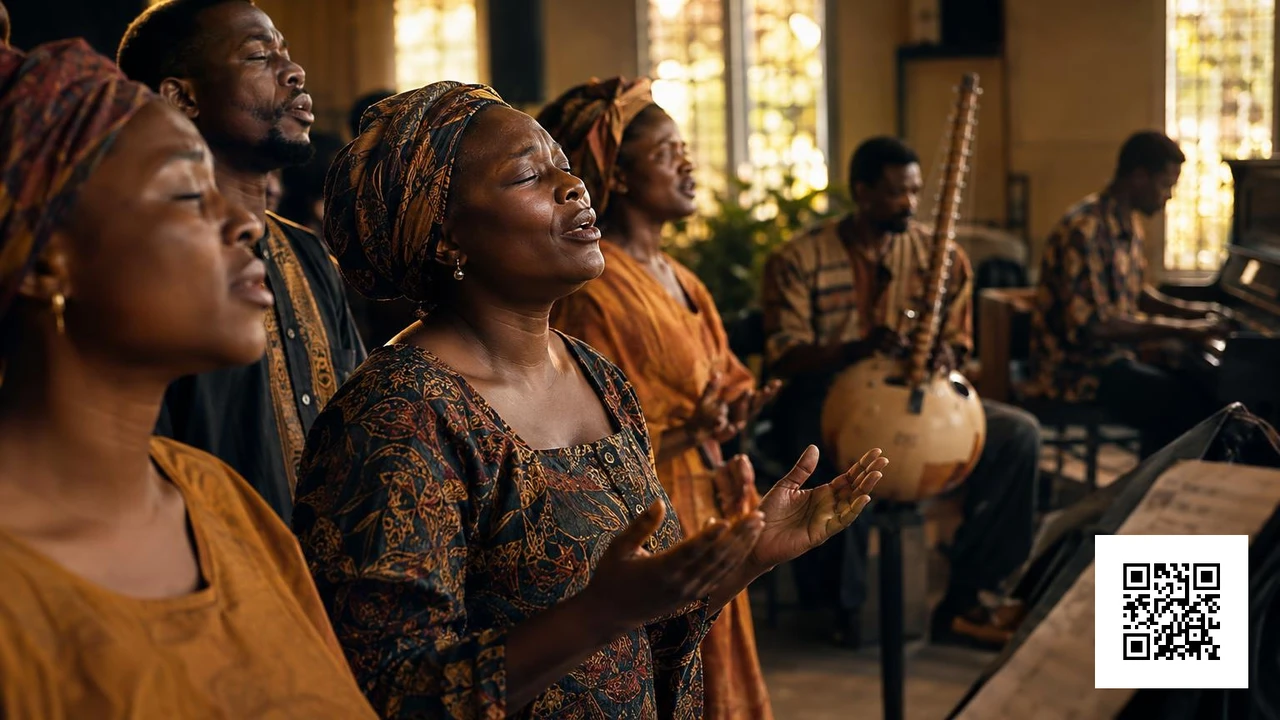
The choir dominates the sound, not as a lead soloist but as a collective mouthpiece. Voices are layered so that individual lines blur at their edges; harmonies are often sustained long enough for minute clashes to soften into warmth. Repetition of short melodic cells turns the group into a single breathing entity: call-like openings are picked up, elongated, and folded back into denser harmonies. This is singing that listens to itself — phrasing breath by breath — and the result is a texture that feels both intimate and communal.
Instruments that color without crowding
Kora
A soft kora threads through the mix with sparse, glassy arpeggios. Its plucked patterns do not chase the voices; they punctuate and comment. Where the choir holds, the kora sketches light outlines of melody and provides a shimmering high-register counterpoint that keeps the ear engaged without breaking the prayerful calm.
Piano and light percussion
Piano supplies broad, mellow chords rather than busy runs, shading cadences with warm intervals that anchor the harmonic field. Percussion is subtle — brushes or soft hand drums that mark time without binary insistence. Together these instruments sustain the 72 BPM pulse and leave expansive silence between gestures, so the voice remains the focus.
Fon as musical material and message
Sung entirely in Fon, the piece makes the language’s tones and syllabic shapes central to its musical logic. In Fon the pitch of a syllable can change meaning, so singers place linguistic inflection as much in pitch as in words; that makes sentence melodies and language pitch inseparable. The choir exploits this: vowels are stretched into long devotional vowels, consonant releases create small rhythmic punctuation, and the tonal contours of Fon shape cadence and melodic turns. For listeners who speak Fon the text carries direct devotional content; for others, the language’s timbral patterns deliver an expressive arc that needs no translation.
Who the music serves and when it fits
The energy stays inward — attentive, steady, and collectively oriented. This is music for close listening, for shared prayer, for evening or still moments where attention lingers on words, breath and harmonic nuance. It addresses a Beninese spiritual sensibility by using the local tongue and communal singing practice; it also rewards anyone who wants a voice-led, contemplative soundscape that prioritizes presence over spectacle.
Fon African Gospel Song
Fon African Gospel Song sits within African sacred music as a choir-led vernacular prayer form. It places Beninese devotional voice at the centre of communal worship, where language and group singing guide musical shape.
Origins and development
This style grew from Christian congregational practice across West Africa, where choirs adopted and reshaped Western hymn models. Throughout the 20th century local choirs, vernacular languages and harmonisation practices became primary vehicles for spiritual expression in many communities.
Defining musical traits
Typical tempi range from about 60–120 bpm; the feel leans slow to measured. Choir-led harmonies and call-and-response phrasing dominate; percussion is light and supportive rather than driving, with bass providing a steady anchor. Instruments commonly include piano for chordal colour, plucked harp-lutes like the kora for delicate counterlines, and hand percussion or soft brushes for subtle pulse. Vocal delivery often stretches vowels and uses sustained harmonies that let micro-dissonances resolve.
How this track aligns
This recording runs at 72 bpm and is sung entirely in Fon by a layered choir. Voices are warm and round, holding phrases so repetition functions as communal breath. Soft kora sits at the mix’s edge with sparse arpeggios; mellow piano shades cadences while light percussion maintains the measured heartbeat without aggressive accents. Fon’s tonal contours and CV patterns shape melodic placement, so linguistic pitch and musical melody interlock to make the piece inward and prayerful.
Next styles to explore
Pentecostal Gospel; West African Spirituals