Rhythm: the 88 bpm pulse
Alèkè Gbè sits squarely at 88 beats per minute, a tempo that immediately sets a walking, measured pace. That pulse is neither hurried nor static; it allows space between phrases so the lead vocal can unfold and the choir can answer. Practically, 88 bpm produces a subtle sway rather than an urgent drive—feet might tap, torsos might rock, and hands will fall into the call-and-response phrasing without crowding the music. The tempo frames the track’s mood tags (African Calm and Recovery): a steady heartbeat that holds memory and personal address rather than pushing toward the dancefloor.
Guitars and small hand percussion
Palm-wine acoustic guitar is the principal texture here, played in a restrained, rhythmic fingerstyle that supports both harmony and groove. The guitar’s role is conversational: it punctuates vocal lines, lays out repeating patterns, and fills the spaces between sung phrases with small melodic turns.
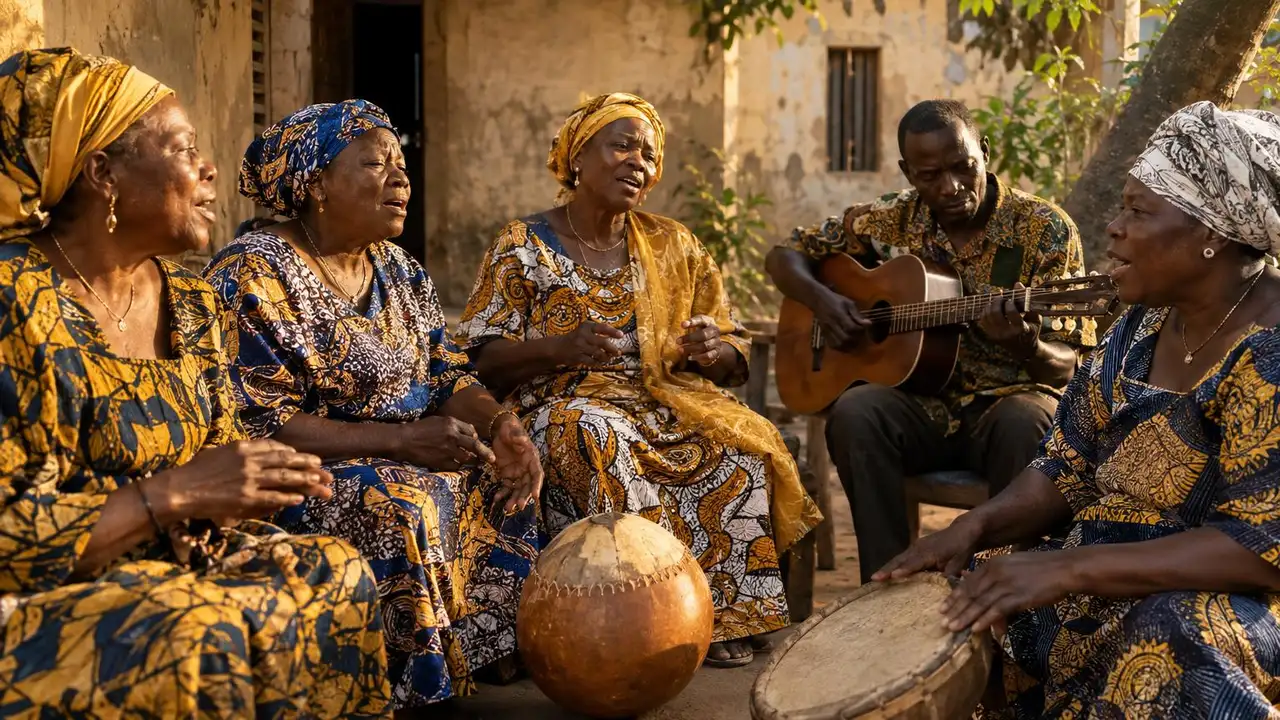
Calabash, soft frame drums and light shakers build a gentle percussive bed. The calabash delivers a rounded, woody thump that anchors low pulses; frame drums supply soft, skin-on-skin warmth; shakers add a high-frequency breath that keeps the flow moving. Together they preserve an intimate acoustic palette—no heavy kit, no amplification blitz—so the human voice remains the centre.
Fon language: tone and address
The song is sung in Fon (Fongbé), a Gbe language spoken in southern Benin. Fon’s tonal contours shape melodic choices: small rises and falls in pitch aren’t merely musical ornaments but carry linguistic meaning. That intertwining of tone and melody makes the lead vocal sound both precise and expressive—listeners who know Fon will track semantic content, while others will register the vocal inflections as emotional punctuation.
Call-and-response choir work reinforces the social address. The lead voice articulates lines that the group answers or expands, a structure that foregrounds collective memory and shared recognition. The published presentation frames the piece as a tribute to grandmothers—gratitude and family continuity are the song’s stated concerns, and the Fon vocal delivery carries those themes with immediacy.
Southern Benin roots and practice
The track is located in the Fon cultural area of southern Benin. Its combination of palm-wine guitar and compact hand percussion aligns with domestic and village settings where such music often functions: song as conversation, accompaniment for small gatherings, and a way to mark relationships across generations. The arrangement’s intimacy—acoustic guitar, close-knit choir, and light percussion—suggests music that travels well in living rooms, courtyards, and ceremonial spaces where elders are present.
Energy and who it is for
Alèkè Gbè’s energy is warm, reflective, and communal. It’s aimed outwardly at grandmothers, as the track’s title and description state, but it also invites any listener seeking calm, remembrance, or gentle company. Those who understand Fon will find the linguistic core; others can follow the architecture of call-and-response, the guitar’s repeating motifs, and the soft percussive pulse. Press play for a measured, human-scaled performance: modest arrangements, clear vocal focus, and a steady tempo that keeps memory—and gratitude—moving.
Benin Fon Traditional Music
Benin Fon Traditional Music sits at the heart of vocal and domestic practice in the Fon cultural area of southern Benin. It places language, family memory and communal response at the centre of coastal West African acoustic traditions.
Origins and development
Rooted in the Fon peoples of southern Benin, this strand draws on long-standing vocal customs: communal singing, praise and memory work. The acoustic guitar was absorbed into local repertoires across the Gulf of Guinea, while hand percussion and call-and-response singing remained core to social and domestic occasions.
Defining musical traits
Typically built around a mid-tempo, measured pulse—here 88 bpm—the style favours steady, syncopated guitar figures and light hand percussion. Drum colours come from calabash, soft frame drums and shakers rather than heavy kit; bass often follows the guitar's low register. Vocals are intimate lead lines answered by a compact choir in call-and-response.
How this track fits
Alèkè Gbè is sung in Fon as a direct homage to grandmothers; its presentation frames gratitude, memory and family continuity. At 88 bpm the pulse is measured; intimate lead vocals sit against a call-and-response choir, palm-wine acoustic guitar and a small hand-percussion set (calabash, soft frame drum, light shakers). The overall effect matches the AFRIKANA tags African Calm and Recovery and the suggested domestic or village performance context.
Neighbouring styles
Palm-wine; Vodou ceremonial music