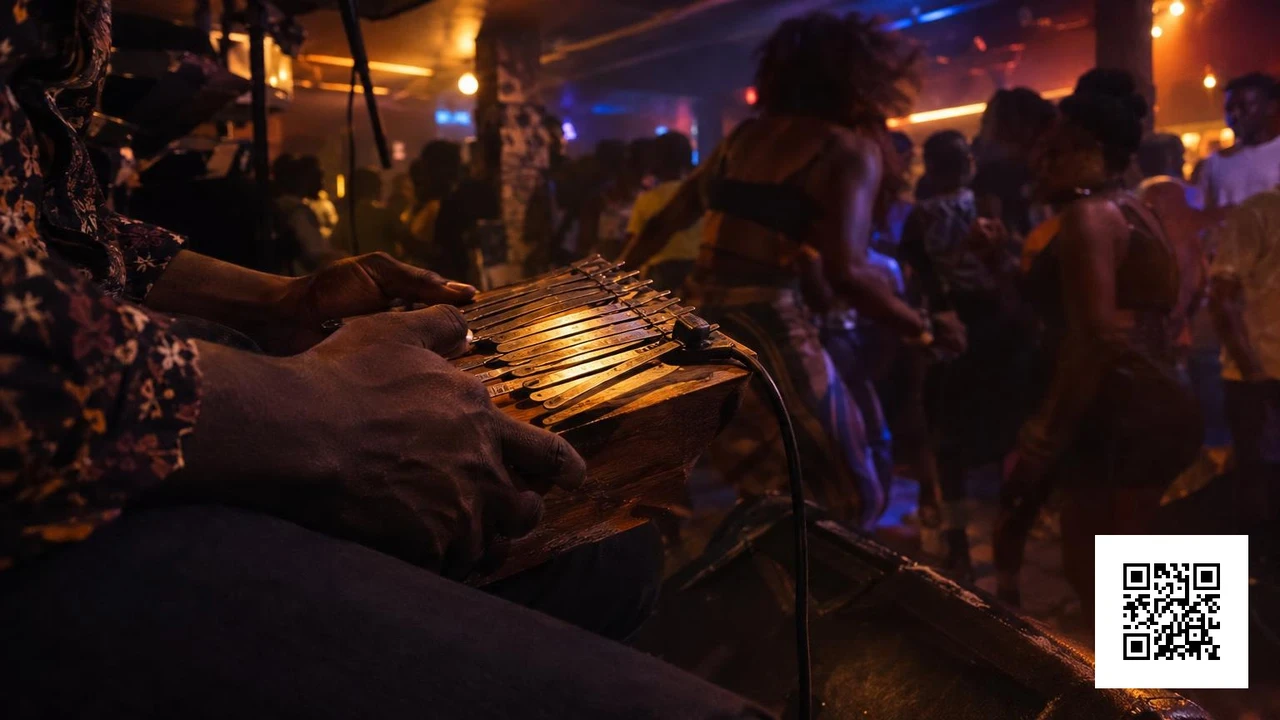
Rhythm that pulls you to the floor
Nzoto eboyi moves at a taut 126 BPM, a tempo that balances urgency with space. The Kinshasa deep groove is everything here: a low-register pulse and pocketed syncopation that claim the hips before the mind can argue. The beat doesn’t rush the dancer so much as keep resetting the body to the same sweet impossibility — you step away, the groove returns, you’re back at the center of the floor.
The track’s pace and rhythmic framing create a looped physical logic. Rather than a crescendo that forces release, the momentum is circular: steady kick and pocketed percussion establish an almost breathing pulse, while the bass and percussive placement leave room for the likembé’s melodic insistence to puncture the space and demand movement.
Electrified likembé in the mix
Electric likembé tone
The likembé is electrified and fronted as the opening detail. Its timbre is metallic and resonant, a plucked melodic figure amplified into a club frequency range. The riff is repetitive, almost mantra-like, and its high-register clarity sits above the low-end warmth.
Role in arrangement
That recurring figure acts like a returning hook: every time the likembé phrases, attention snaps back to the center. In practice it functions as the track’s emotional pivot — melodic memory and centrifugal force — dragging the dancer back whenever the body contemplates leaving the floor.
Lingala voice as direct instruction
The song is sung in Lingala and contains a single declared imperative: Danse jusqu’à l’épuisement. Delivered as command rather than description, the line frames the vocal role as an indexical driver of the scene. The voice briefs the listener and the likembé answers; language and instrument set up a call-and-response of will and motion rather than a storytelling narrative.
That short, forceful line is a structural anchor: it doesn’t narrate a scene so much as authorize the continued physicality the groove insists upon.
Kinshasa groove among regional peers
Nzoto eboyi sits in a short local map with two other Lingala tracks. Tikala naino shares the language but leans on a lokole pulse, muted guitar textures and a warm sub — a different rhythmic and textural frame that softens the edge. Style Na Yo stays within Congolese rumba phrasing, which emphasizes different rhythmic cadences and melodic movement.
Read together, the three pieces demonstrate how shared language can live across divergent dance registers: Nzoto eboyi stakes its claim through the electrified likembé and deep bass inside a Kinshasa groove, while the others sketch alternate contours for the same linguistic terrain.
Club energy and who it serves
The mood is hypnotic, deep, sweaty, addictive, physical and joyful. This is music made to hold bodies in motion: for dancers who want repetition that compounds, for DJ sets that prize a persistent low-end and for anyone who enjoys a melodic hook that continually reasserts itself. AFRIKANA presents the piece alongside a brief narrative and style tags; a video appears under the title “Nzoto eboyi, Lingala Afrohouse Song | African House Music.”
Lingala Congo Afrohouse
Lingala Congo Afrohouse names a Congolese strand of Afrohouse performed in Lingala that places Kinshasa rhythmic sensibilities into a club context. It sits among contemporary African dance forms that blend electronic production with locally rooted grooves.
Origins and development
This strand grows from the pan‑African Afrohouse movement and Kinshasa’s long history of dance music. Producers and DJs adapt house’s steady club pulse to Congolese rhythmic phrasing, privileging local grooves and call‑and‑response vocal traditions sung in Lingala.
Defining musical traits
Tempo typically centers in the club house band (around 120–128 BPM); Nzoto eboyi clocks 126 BPM. Drum patterns combine a four‑on‑the‑floor pulse with syncopated Kinshasa groove elements. Low, sustained bass anchors the mix; vocals are sung in Lingala and often assertive or directive. Signature timbres here include an electrified likembé as a repeating melodic agent, layered percussion and a deep low end.
How this track fits
Nzoto eboyi foregrounds an electrified likembé that returns as a repeating figure over a deep low end and a Kinshasa deep groove. The vocal delivers a single imperative — Danse jusqu’à l’épuisement — which frames the likembé as the force dragging the dancer back to the floor. Its 126 BPM, hypnotic groove and textural focus place it squarely within Congo Afrohouse while leaning into the likembé’s melodic insistence. The track is read alongside Tikala naino and Style Na Yo by contrasting rhythmic and instrumental frames.
Neighbouring styles to explore
Congo Velvet Afrohouse; Congolese Rumba