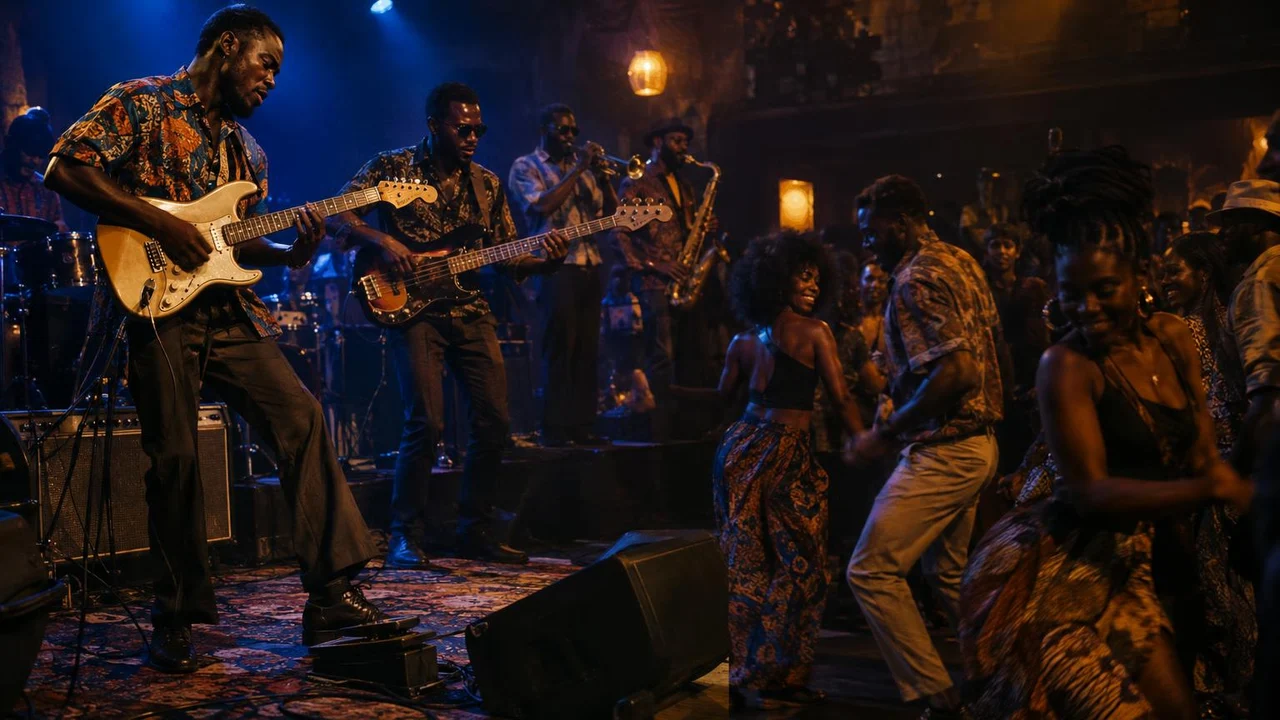
Rhythm and the body's pull
The track moves like a measured sway rather than a sprint. Drums lock into a steady pocket that gives the low end room to breathe; rhythmical space is as important as the hits. That breathing allows the bass to slide and push against silence, creating a tug that invites the body to lean forward and sway.
Syncopation sits between the kick and snare rather than on top of them, so movement feels elastic rather than rigid. Dancers respond to that elasticity: the groove asks for close, repeated motion and small, insistent steps rather than expansive leaps.
Instruments and their roles
Guitar and bass
The wah‑wah guitar functions as both punctuation and seduction. Used sparingly, its vowel‑like sweeps answer vocal lines and add a sensual, almost spoken quality to melodic phrases. It rarely crowds the mix; instead it peppers the groove with short, expressive gestures.
The bass is deliberately elastic—sliding, warm and slightly bent around the beats. Those syncopated lines supply propulsion and a physical centre: they pull the torso and hips into motion and create an audible tension that resolves in the drummer’s pocket.
Brass and arrangement
Brass arrives as muted trumpets and rounded sax timbres, giving a vintage color that nods to regional brass traditions. Horns punctuate hooks with short melodic signatures, functioning like exhalations—brief, polished phrases that accentuate the nocturnal atmosphere without dominating it.
Arrangement favors space: each instrument occupies a defined range so the collective sound remains uncluttered and intimate.
Language, voice and hooks
Verses in French provide narrative lines with a measured, elegiac delivery; they sit more as storytelling than as raw declaration. Fon (Fongbé) refrains act as the song’s communal spine—short, melodic and easy to repeat. That bilingual interplay is both musical and social: French frames sentiment, Fon refrains invite participation.
Vocal phrasing leans toward tenderness rather than theatricality. Hooks in Fon are compact to encourage call‑and‑response on the dance floor, transforming private expression into shared chant.
Region and courting tradition
The song channels Beninese courting conventions where metaphors of fire, warmth and light describe desire with care and respect. Seduction here is intense but tender: the arrangement, phrasing and rhythmic interplay suggest attraction that is magnetic without being aggressive.
This approach aligns with wider West African practices in social music—personal feeling becomes communal through repetition and rhythmic alignment, so intimate sentiment is often reframed as collective experience.
Energy, performance and listening
On stage the Fon hooks are moments that open the room: musicians leave space for dancers and audience responses, and solos serve the groove rather than theatrical display. Production choices—reverb on vocal doubles, a tight guitar midrange and a slightly compressed, round low end—keep the sound polished but warm.
For focused listening: first lock to the bass and drum pocket to feel the propulsion, then follow the wah‑wah motifs as they answer the voice, and finally listen for brass as short, sighing accents. That order reveals how the song balances seduction with communal movement.
Beninese Afro‑Funk
Beninese Afro‑Funk sits within West African dance-music traditions and the broader Afro‑funk lineage that fused 1970s funk grooves with local rhythmic forms. This track exemplifies that place: a nocturnal, slow-burning Afro‑Funk groove that channels Beninese courting practices into a sensual, danceable soundscape.
Origins and development
Afro‑funk grew when West African bands absorbed American funk and folded it into regional dance genres such as highlife and local percussion traditions. In coastal states like Benin, electric guitars, brass sections and amplified rhythm sections were reorganized to serve club and social-dance contexts, producing a funk-informed, horn-driven popular music.
Defining musical traits
Typically midtempo (around 80–110 BPM), the style relies on a steady, syncopated drum pocket and a bass that moves melodically as much as rhythmically. Guitar often uses wah‑wah and rhythmic punctuation; brass supplies short, rounded melodic hits; vocals favour call‑and‑response phrasing and communal hooks. Instrumentation commonly includes electric guitar, electric bass, brass, drum kit, keys and hand percussion.
How this track fits and bends
This recording leans into the genre’s nocturnal side: wah‑wah guitar used sparingly for sensual punctuation, an elastic, sliding bass that breathes around the drums, and muted, vintage-style brass that accents hook cadences. Vocals alternate French verses with Fon refrains, turning intimate lines into chantable, communal motifs. Production choices—reverb on vocal doubles, tight midrange guitar and a round, slightly compressed low end—keep the groove uncluttered while inviting dance and call‑and‑response.
Styles to explore next
Highlife; Afrobeat