Rhythm and how it moves the body
The track rides a steady 110 BPM pulse that feels like a market waking up: deliberate, forward-moving and easy to step to. The bass and percussion lock into a syncopated pocket that nudges hips and feet rather than forcing them. Rhythmic accents fall between the primary beats — brass punctuation and call-and-response hits arrive on offbeats — so movement becomes a push-and-pull between grounded downbeats and quick, bright returns. The overall effect is propulsion without rush: walking energy that can open into shuffling steps or gathered claps.
Instruments and their sonic roles
The arrangement balances string, brass and percussion so each element has room to breathe and a clear function.
Guitar and bass
Highlife-style guitar supplies repeated melodic filigree: short, interlocking phrases that decorate the chordal space and keep the ear moving upward while the low end does the work. The syncopated bass outlines the groove’s foundation, dropping and lifting to create pocketed spaces where the guitar and voices can answer one another.
Percussion and brass
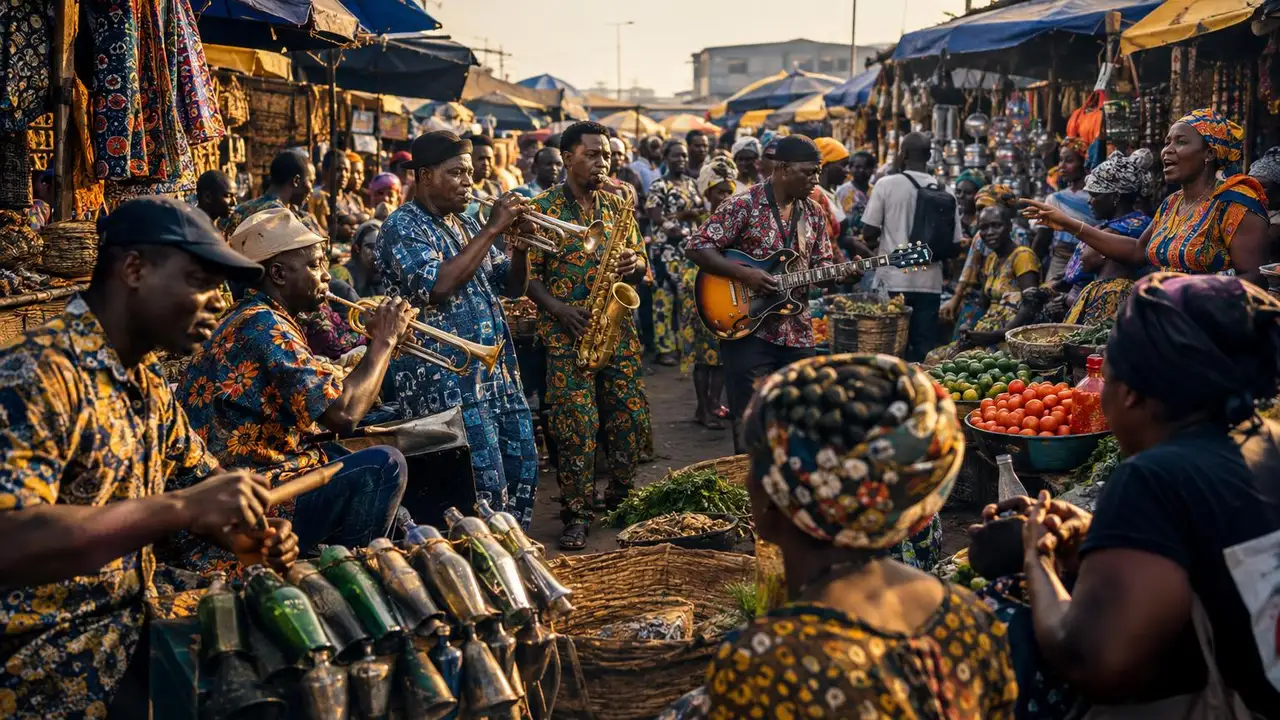
Metallic percussion and bottle hits add a household, tactile texture — sounds you can imagine finding amid a busy market and then repurposed as rhythm. Those clinking tones slice through the midrange and help define offbeat accents. Brass stabs arrive as punctuation: they mark phrase endings, lift choruses and highlight moments of collective response, brightening the arrangement without crowding it.
Language: Fongbé hooks and English narration
Fongbé occupies the hooks and the communal responses. Refrains in Fongbé sit where voices repeat and answer, making the language the vehicle for participation. The call-and-response structure uses Fongbé as the communal frame: refrains return and the group answers, anchored to the groove.
English carries the narrative lines. Those English passages ride the same steady pulse but function differently: they articulate short, single-line messages that move across the musical bed, providing a narrating thread that sits above the repeating Fongbé frames. Together the two languages create layers of address — one inward-facing and collective, the other outward-facing and explanatory.
Region, market life, and naming
The music is directly tied to Cotonou’s Dantokpa market. The arrangement turns everyday market sounds into musical elements: guitar and brass sketch the sonic map of stalls and calls, while metallic percussion evokes the clatter of commerce. The video title labels the track as Fon (Fongbé) music from Cotonou, and the vocal roles are organized to reflect market life — communal refrains and call-and-response that read like voices in a busy public space.
Energy and who it is for
At 110 BPM the piece balances workaday momentum with moments of lift: the groove keeps things moving like morning commerce, while guitars and brass brighten the choruses and invite group response. The Fongbé refrains create an inside energy for those present — a call to join the chorus — while the English lines address listeners farther afield, offering a narrative thread anyone can follow. It’s music built for shared movement: walking, dancing, calling back and forth, and carrying a sense of place without slowing the day down.
Afro-Funk in Dantokpa Morning
Afro-Funk is a West African urban popular style that folds Highlife guitar language into funk‑derived grooves and horn arrangements. In African music it belongs to mid‑tempo, dance‑oriented ensemble forms that foreground communal vocals and rhythmic interlock. This recording ties that style to Cotonou market life, where Fongbé refrains invite communal participation alongside an English narrative thread.
Origins and development
Afro‑Funk grew from cross‑currents between West African popular dance music and American funk and soul, becoming prominent in urban scenes from the 1960s onward. Electric bands absorbed Highlife guitar phrasing and brass into tighter, funk‑informed ensemble formats that emphasized groove and call‑and‑response.
Defining musical traits
Typically mid‑tempo (roughly 100–120 BPM), Afro‑Funk rests on steady, syncopated drum grooves and elastic, syncopated basslines. Interlocking Highlife‑style guitar figures sit above horn stabs; percussion often includes metallic bells and found‑object hits. Vocals favour call‑and‑response and communal refrains that punctuate the groove.
How this track fits
This recording runs at 110 BPM and places Fongbé refrains and call‑and‑response at its centre. Highlife‑style guitar supplies repeated melodic filigree while a syncopated bass locks with metallic and bottle percussion; brass punctuates chorus returns and English carries the narrative lines. Rhythmic accents often fall between the beats, creating a push‑and‑pull that nudges hips and feet.
Next styles to explore
Highlife; Afrobeat