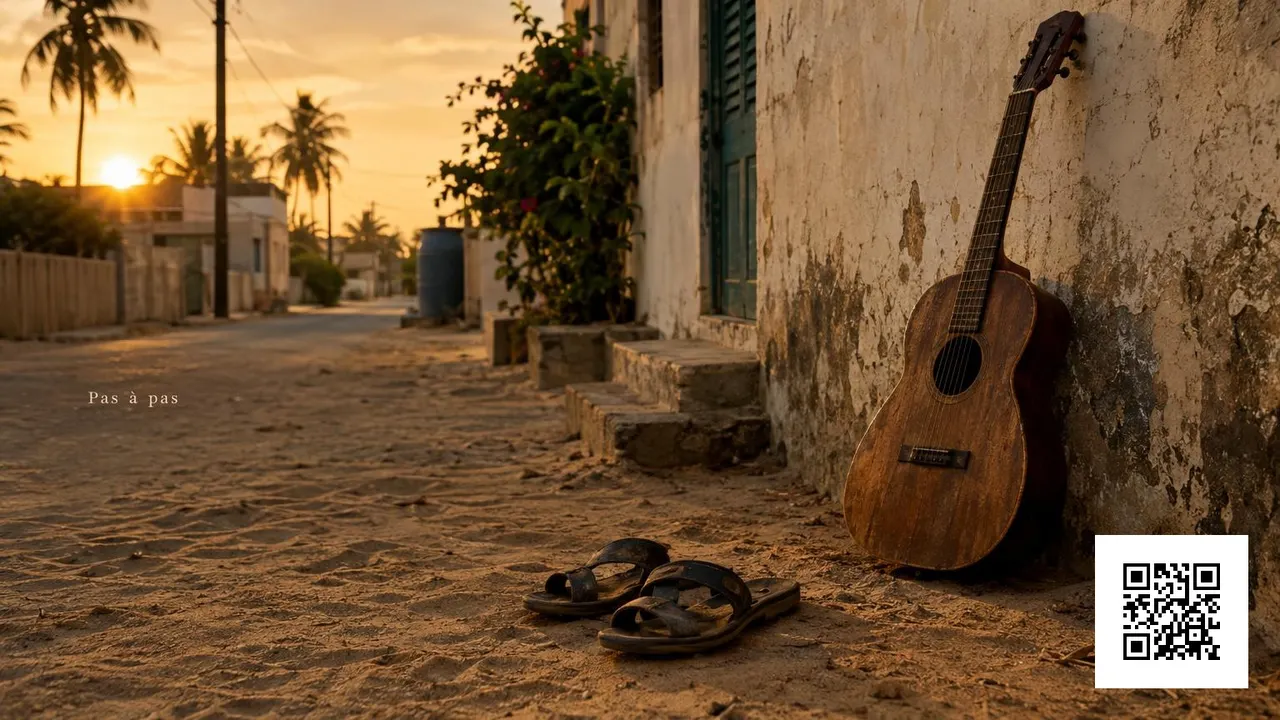
Pas à pas opens at 89 BPM and sets French as the track’s main voice. The song names mornings, slow steps and daily care in Français, giving its statements room to arrive and settle.
Short Wolof and Pulaar phrases appear as quick responses. They do not replace the French lines; they signal neighbourhood, belonging and conversational presence alongside the central narration.
French as the track’s public narrator
French carries the song’s principal sentences. Lines in Français form the narrative backbone of the piece and return often enough to feel like an interior refrain that measures time and step.
Placed at a steady 89 BPM, those French lines arrive with space. That pacing lets full phrases breathe and lets listeners hear each choice of word as a small, deliberate step.
Because the song frames spirituality and faith through those French lines, the language reads as reflective and outward facing. The register suits radio listening, slow walks and quiet mornings where a listener names resilience and dignity aloud.
Wolof and Pulaar as immediate replies
Wolof and Pulaar do not take whole verses. Instead they punctuate the French narration with short gestures that behave like answers in a street exchange or brief recognitions from neighbours.
Those turns act as local markers. They arrive as concise acknowledgements rather than extended argument, making them recognisable signals of place without shifting the song’s narrative centre.
In other pieces on AFRIKANA, Wolof can lead whole songs and change the address; here it stays as a familiar voice beside the French line, a way to say I see you while the main story keeps speaking.
Who this language mix calls in
The mix speaks first to listeners who name their inner life in French: walkers, radio listeners and people who use Français for thoughtful speech. At the same time, the Wolof and Pulaar echoes invite those who hear local language as intimacy.
Those audiences overlap heavily in Senegal and the Sahel. A francophone listener will find the local phrases familiar rather than foreign. A Pulaar or Wolof speaker will recognise membership in the brief lines and feel the song nod toward their daily speech.
That shared address makes the track conversational. French gives the frame and the larger sentences; Wolof and Pulaar supply the small recognitions that turn a private reflection into a neighbourhood exchange.
Language and the song’s spiritual walk
Spirituality and faith are named themes and the languages divide the work of that naming. French shapes meditative statements about resilience and transmission; Wolof and Pulaar place those statements inside local lived practice.
Tempo matters. At 89 BPM the track moves as a measured march. The pacing lets French lines read as full reflections and makes the Wolof and Pulaar phrases register clearly as concise gestures rather than hurried ornament.
A phrase like Le goût de ça (the taste of that) fits this layout: it points to the small, savourable things that build daily dignity, and the song then supplies local replies that recognise them.
Palm-Wine Guitar | West African Soul
This track sits in Palm-Wine Guitar and West African Soul and names Senegal and the Sahel as its region. Its musical frame is close, acoustic and paced for walking and quiet listening.
Origins and region
Pas à pas locates itself in Senegal and the Sahel. That geography shapes the song’s conversational approach and its pairing of French with short Wolof and Pulaar turns.
Defining traits
Tempo is specific: the song runs at 89 BPM, a midtempo suited to slow walks and morning light. Vocals lead in French, with brief Wolof and Pulaar phrases answering. The arrangement foregrounds palm-wine fingerstyle guitar, soft calabash, light shaker and measured silence, which keeps the voice intimate and deliberate.
How this track fits the style
Pas à pas stays on the style’s reflective lane. It places a warm baritone over acoustic textures and reserves local languages for punctuated replies. That layout keeps storytelling clear while signalling community at the edges of each phrase.
Styles to explore next
If you want neighbouring sounds, try Neo-Griot or Afro-Spiritual pieces that favour restrained acoustic frames and narrative clarity. For examples of different language balances on AFRIKANA, listen to Rihet El Watan: a slow Raï of exile and small memories and Ténéré Voices, a Sahel hymn in Tamasheq.