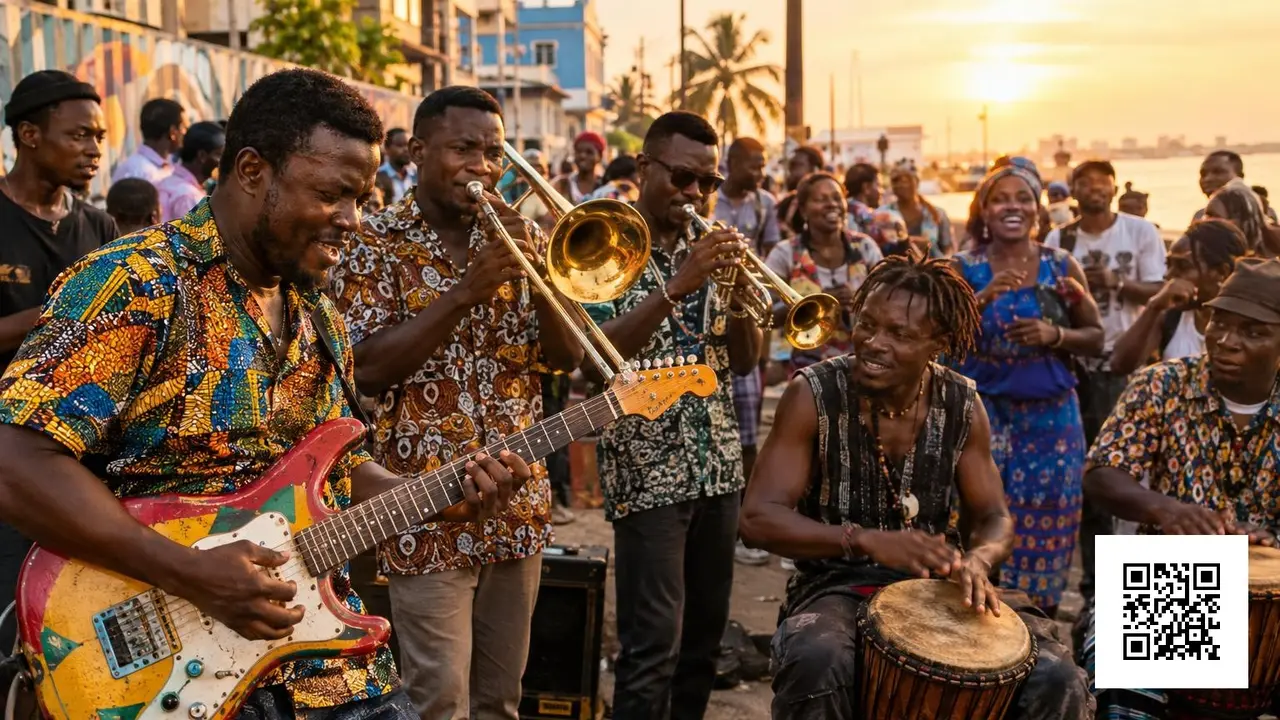
Rhythm that moves the body
At a precise 108 BPM the pace feels deliberate without stiffness. The drum pocket holds a measured sway: steady kick and snare push while hand percussion lays a rolling undercurrent. That combination lets space open for conversational phrasing — singers, horns and guitar trade short statements that land squarely on the beat or push just behind it. The result is a walking groove that encourages rocking rather than stamping, a motion that loosens shoulders and keeps hips engaged over long stretches.
Guitar, brass and Fon drums
Bright Highlife guitar
Guitar sits high in the mix with crisp arpeggios and clipped rhythmic chops. Its lines act like a social narrator: filling gaps left by the voice, echoing melodic hooks, and punctuating vocal entries with tiny ascending runs. These guitar tones are buoyant and clean, their attack quick enough to cut through brass harmonies while still feeling airy—exactly the kind of playing that invites group singing.
Vintage brass and Fon percussion
Brass arrives with a warm, slightly aged color: short harmonized stabs, gentle counter-melodies and fanfare-like accents that decorate refrains rather than dominate them. Below those horns, Fon-rooted percussion gives the track its tactile push. Hand drums and congas articulate offbeat accents and cross-rhythms that breathe life into an otherwise steady tempo, creating a hands-on, human texture that keeps the groove tactile and communal.
Fongbé hooks answering English lines
Language is arranged as musical architecture: narrative verses come in English while the hooks are delivered in Fongbé. Those short Fongbé refrains operate like call-and-response anchors — they answer, puncture and celebrate the longer English statements. The alternation sharpens the song’s conversational shape: English lines state a thought or intention, Fongbé phrases reply with immediate, collective feeling, and the band fills the spaces with instrumental retorts.
Cotonou and belonging in the vocal
Cotonou is named repeatedly and treated as the point of return. The lyrics frame the city as a place of reunion and homecoming; the delivery—warm and assured—stitches pride into each refrain. Because the refrains are communal and in Fongbé, the city becomes the stage for a group response: coming back is not just an individual act but one that invites neighbours and friends to join the moment.
Energy and who it is for
The track’s mood is warm, proud and joyful without urgency. Its 108 BPM pocket, bright guitar, vintage horns and participatory Fongbé hooks make it fit for shared spaces: neighbourhood gatherings, informal parties, doorways where people pause and greet each other. It asks for bodies that sway together and voices that call back—music designed for recognition, reunion and the gentle ease of arriving home.
(The video title places the recording in Benin and pairs Fongbé hooks with English narrative lines.)
Fon Afro-Funk
Fon Afro-Funk places Fon rhythmic practices and local call-and-response inside an Afro-funk groove. Rooted in Benin’s Fon-speaking communities, it pairs Highlife-derived electric guitar vocabulary with percussion-based propulsion and communal refrains.
Origins in Benin and Fon
The style emerges from Fon-speaking communities in Benin and from West Africa’s long uptake of American funk. Musicians adapted electric grooves to local drum patterns and call-and-response singing, folding foreign rhythmic ideas into existing communal performance practices.
Defining musical traits
Fon Afro-Funk favors a midtempo, danceable pulse (commonly around 100–110 BPM), steady drum grooves with offbeat accents and cross-rhythms, and a prominent low end. Guitar follows bright Highlife lines: crisp arpeggios, melodic fills and rhythmic chops. Brass supplies rounded harmonies, stabs and short fanfares. Vocals operate as call-and-response, often with short local-language refrains answering longer narrative lines.
How this track fits
This recording sits at a measured 108 BPM. Bright Highlife guitar rides high in the mix while vintage brass offers warm counter-melodies; Fon drums and hand percussion articulate offbeat accents that push and pull the steady pocket. Fongbé hooks answer English narrative lines about returning to Cotonou, shaping a warm, proud, joyful communal homecoming groove.
Nearby styles to explore
Highlife; Afrobeat