72 BPM and how it moves the body
72 BPM is the structural heart of this performance. That steady, deliberate pulse gives time for each phrase to land and for the listener’s breath to synchronise with the music. Rather than urging movement, the tempo encourages small, embodied gestures: a slow sway, a held posture, the kind of attentiveness that feels like sitting in a cool room after heat.
Tempo here is descriptive as much as functional—72 BPM frames the prayer as measured and reflective, a pace that foregrounds space between notes rather than rhythmic density.
Voices at the centre: Chorale Azɔ
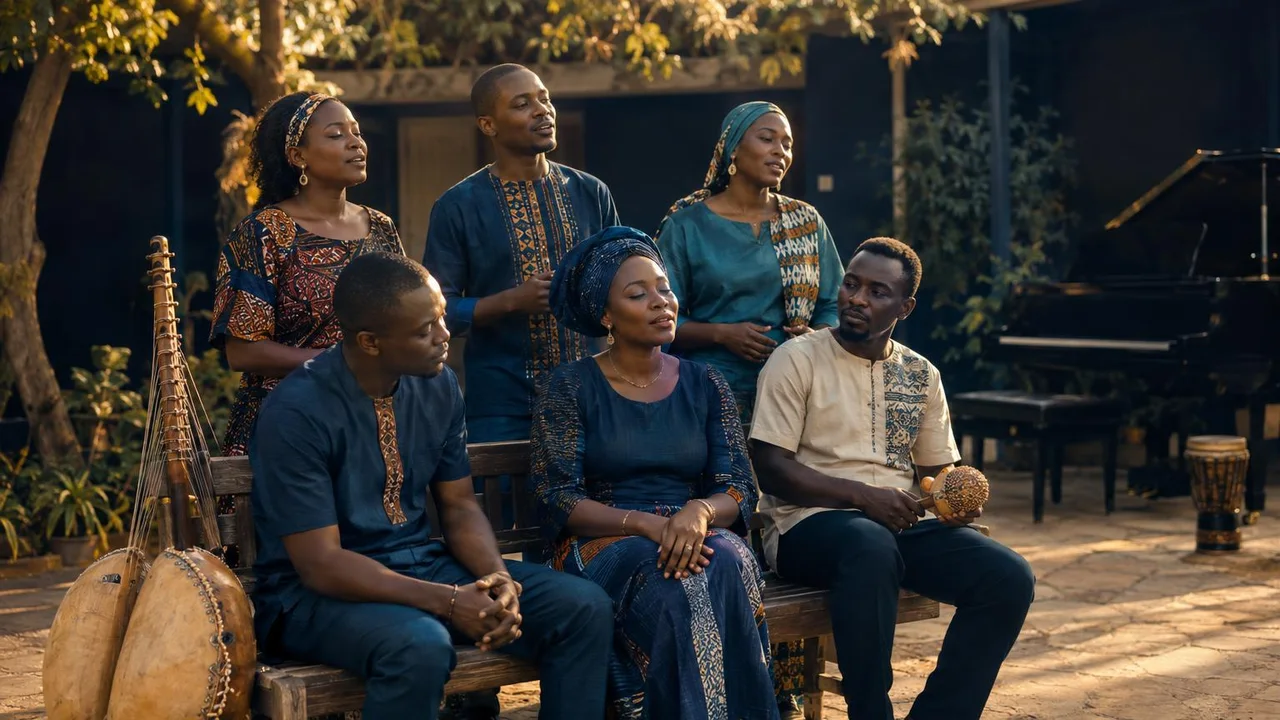
The track places the choir front and centre. Chorale Azɔ’s ensemble sound is warm and collective, folding individual timbres into sustained harmonic shapes. Group singing is the primary communicator: the choir carries the prayer’s weight, shaping cadence and emotional contour more than instrumental solos.
Harmony operates as texture rather than show, creating layered chords that soothe instead of startling.
Instruments: kora, piano, light percussion
Kora and its resonance
The kora here is soft and textural. As a West African harp-lute, its plucked strings add a bell-like shimmer that sits above the choir without competing with it. The kora’s resonance punctuates phrases and supplies a gentle melodic weave, a familiar West African timbral marker that keeps the arrangement rooted in local instrumental practice.
Piano and subtle percussion
Mellow piano offers sustained chords and quiet fills, broadening the harmonic field beneath the voices. Light percussion provides a delicate, non-intrusive pulse—enough to mark the tempo but never to propel the piece into dance. Together these instruments create a listening plane that supports the choir’s prayerful delivery.
Fon language: sound, tone and meaning
Sung in Fon, the piece carries the phonetic and tonal qualities of a Gbe language from Benin. Fon’s tonal inflections interact with melody: pitch choices have to negotiate linguistic tone while conveying musical phrase. That interplay makes the vocal line feel both spoken and sung, a cadence that can sound inherently intimate and prayerful to listeners familiar with tonal West African languages.
Language here functions as both message and instrument—the meaning of the words is embedded in the music’s contour, and the choir’s delivery prioritises clarity and communal feeling.
Energy, listening context and companions
Tagged as African Gospel and Spiritual Voices with a mood of African Calm & Recovery, this recording is built for quiet attention—prayer, reflection, or meditative radio programming. Its texture and tempo distinguish it from faster Fon-language pieces: Alèkè Gbè moves at 88 BPM with palm-wine guitar and light hand percussion, while Gàn Wè runs at 100 BPM with a percussion-forward Afrobeats energy. By comparison, Azɔ Mawu’s 72 BPM, kora-and-piano textures, and choir-forward arrangement place it squarely in a slower, restorative space.
It’s music for listeners who want presence rather than propulsion: the kind of track you press play on to centre a room, a moment, or a breath.
African Gospel and Spiritual Voices
African Gospel and Spiritual Voices sits within West African devotional practice, where Christian hymnody and local vocal traditions meet communal singing. This strand foregrounds prayerful texts in local languages and collective choir textures as a means of spiritual expression and recovery.
Origins and development
The style grew from 19th–20th-century encounters between missionary Christianity and African congregational music. Churches and community choirs adapted hymn forms to local call-and-response, harmonies and language; over time these practices absorbed indigenous melodic sensibilities and regional instruments.
Defining musical traits
Vocals lead: warm choirs, layered harmonies and frequent call-and-response. Tempos range from slow, meditative pulses to mid‑tempo uplift; percussion tends toward light hand or subtle kit patterns rather than dense grooves. Bass is supportive and unobtrusive; common instruments include piano/organ, acoustic strings and occasionally traditional plucked instruments like the kora.
How this track fits
Azɔ Mawu, Paix des cœurs is a clear example: a Fon-language Beninese prayer performed by the artist with Chorale Azɔ, set at 72 BPM. The arrangement centres a warm choir, with soft kora, mellow piano and light percussion creating a calm, recovery-minded soundscape that emphasises meditation over rhythmic drive.
Neighbouring styles to explore
Palm-Wine Guitar and Afrobeats Energy