Rhythm: a 72 BPM heartbeat
The track moves at 72 BPM, a tempo that feels like measured breathing more than marching time. That deliberate pulse leaves generous space between phrases: vocal lines extend and fold back into silence, and the percussion only marks the beat rather than filling it. The result is a porous steadying force — you feel the rhythm as a heart that holds the voices, not as an engine that pushes them. Physically, it invites a slow sway or a communal inhalation-exhalation, the kind of movement that follows the cadence of a prayer meeting or a quiet procession.
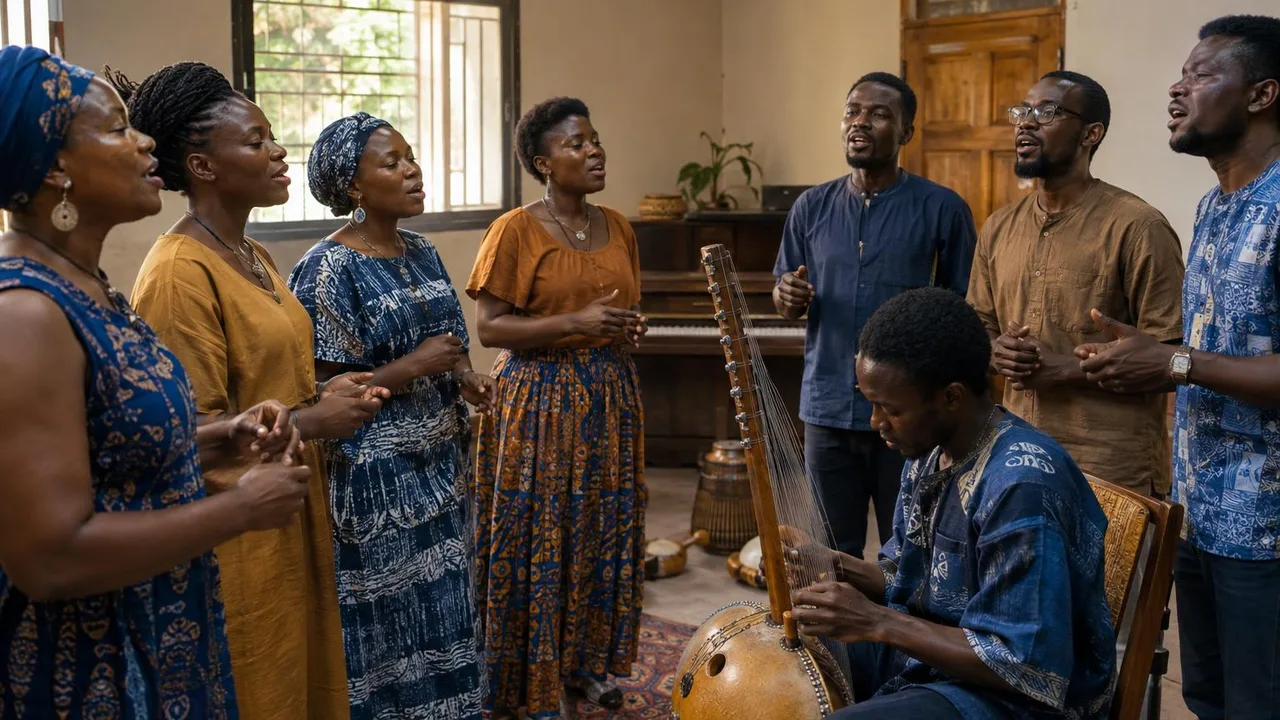
Instruments: kora, piano, percussion, choir
Kora: harp-like counterpoint
The kora enters as a softened plucked voice, offering light arpeggios that sit just under the choir. Its ringing overtones cut through the harmonic bed without dominating; the effect is intimate, like a low lamp in a room of voices. The kora supplies delicate ornaments and a linear brightness that keeps the arrangement tied to West African stringed traditions.
Piano, light percussion and choir
Piano provides rounded, mellow chords that cushion the choir rather than lead it—gentle support that thickens the space between vocal phrases. Percussion is understated: taps and muted strikes that mark time without crowding the mix, keeping textures open and airy. The choir is the central instrument: warm, layered and communal, carrying main lines and folding into harmonies that lift the song from private petition to shared utterance.
Fon language: tone, phrasing and musical meaning
Sung in Fon, the phrases are shaped by a tonal grammar where pitch and meaning travel together. The choir’s lines read like speech set to melody: syllables bend, rise and fall in ways that make the words themselves feel musical. Even without translation, Fon’s inflections communicate address and intent—petition, consolation, gratitude—so the voice functions simultaneously as text and tune, carrying cultural signifiers that anchor the song to Beninese spiritual practice.
Benin roots and communal practice
This is a Fon prayer piece from Benin performed by Chorale Azɔ and framed within contemporary devotional practice. The arrangement pairs regional string color (kora) with familiar church palette elements (piano, choir), so the recording sits in an intersection of local ritual singing and modern accompaniment. The video title identifies it as a Fon African Gospel song, which places the piece in the practice of singing prayers collectively in local language while using both traditional and church-associated instruments.
Energy: calm, restorative communal voice
The mood is steady and restorative rather than ecstatic. This is music for pause: reflective prayer, a healing circle, or the quiet after ceremony. The choir gathers listeners into a shared sonic breathing room while the kora and piano keep that breath gentle and attentive. Listeners seeking a measured, communal calm will find the arrangement hospitable—its warmth comes from the group voice and the way sparse accompaniment leaves space for each phrase to settle.
African Gospel
African Gospel sits within West African vocal worship and contemporary spiritual practice, where church forms meet local languages and instruments. This piece is a Fon prayer from Benin that centers communal choir singing in a slow, restorative register.
Origins and development
African Gospel grew from Christian worship introduced across Africa and was reshaped locally: hymns and liturgical forms translated into vernaculars, choirs expanded, and regional instruments and rhythmic sensibilities were folded into devotional repertoires. In West Africa this produced choir-led services that blend church harmony with local melodic practice.
Defining musical traits
Tempo often moves in a reflective band (roughly 60–90 BPM). Drum work is light and steady rather than aggressive, with percussion marking a gentle pocket; bass underpins without dominating. Vocals are choir-centred, layered harmonies, sometimes call-and-response. Typical accompaniment includes piano or organ, acoustic guitar and regional strings such as the kora.
How this track fits
This Azɔ Mawu, Paix des cœurs recording is a Fon prayer from Benin performed by Chorale Azɔ at 72 BPM. A heartbeat-like pulse leaves long space between phrases; soft kora arpeggios and mellow piano provide a cushioned harmonic bed, light taps of percussion keep the texture porous, and a warm choir carries the communal, prayerful focus.
Styles to explore next
Spiritual Voices; Fon traditional song.