A steady 72 BPM pulse
The track moves at an unhurried 72 beats per minute. That steady, deliberate tempo gives every phrase room to unfurl: vowels can be held, harmonies can bloom, and silences become part of the phrasing. Instead of driving momentum, the pulse is a measured frame that lets the choir and acoustic textures breathe. At this pace call‑and‑response gestures feel reflective rather than ecstatic; the effect is one of measured arrival rather than hurried statement.
Voices and how they move
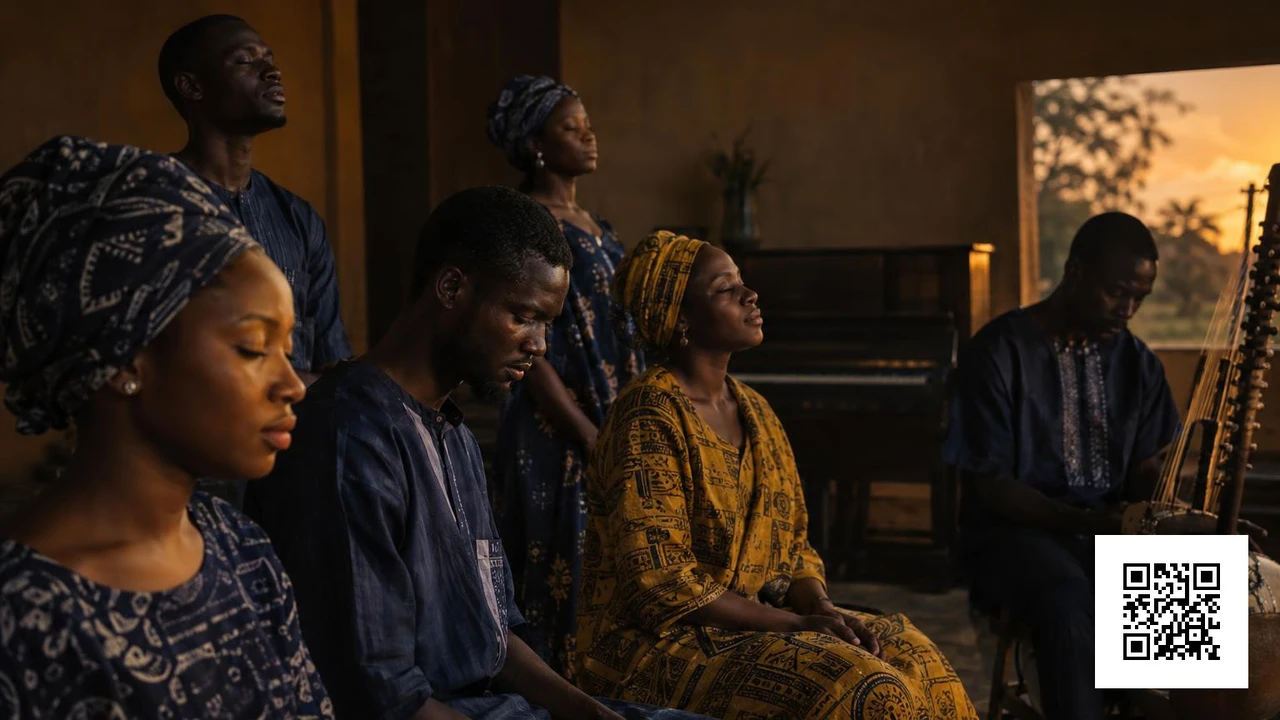
Voices are at the centre. A warm choir carries sustained harmonies, with lead lines emerging and retreating into group responses. The arrangement favours long tones and careful dynamics: notes are often held through the bar, and the choir shapes those holds into cushions that support the smaller instrumental colors.
Listen for the interplay between solo or lead passages and the choir’s answering clusters. Those shifts—when a single voice opens a phrase and the ensemble closes it—define the phrase boundaries and create a conversational, prayerful flow.
Kora, piano and light percussion
Kora
The kora appears as a soft, plucked counterpoint: delicate arpeggios and gentle runs that decorate vocal lines rather than compete with them. Its timbre—bright but not metallic—adds a West African stringed texture that feels intimate alongside the choir.
Piano and percussion
Piano provides mellow chordal support and quiet melodic motifs, filling spaces between sung lines with rounded harmonic shapes. Percussion is used sparingly: light punctuation and subtle rhythmic markers that emphasize phrase endings and give the tempo a discreet backbone without pushing the music forward.
Fon language and melodic shaping
Sung in Fon, the words shape melody as much as melody shapes them. Fon is a tonal language; tonal contours and syllabic rhythm influence how lines are set, producing melodic choices that respect speech melody and enunciate meaning through pitch. The result is vocal delivery where phrasing and lyrical cadence feel inseparable—phrases breathe where the language allows, and rests occur at natural linguistic boundaries.
Mood, purpose and who it's for
Presented as a prayerful piece with a mood of calm and recovery, the track intends to soothe and to spread a message of peace. The sound palette—choir forward, gentle kora, soft piano, light percussion—creates a listening space suited to quiet reflection, communal singing, or moments of consolation. It’s music for listeners seeking calm, for congregational or personal devotion, and for anyone who wants a measured, restorative musical pulse.
Listening tip: find the lead voice first, then let the choir’s held tones map the stanza shapes. At 72 BPM, the gaps between phrases are as informative as the notes themselves.
African Gospel
African Gospel is named here as the track’s genre and sits within the spectrum of Christian songcraft across West Africa, where congregational singing and local languages shape worship. It occupies a place in African music that foregrounds choir-led textures and acoustic accompaniment for prayerful settings.
Origins and development
African Gospel grew from Christian worship introduced to the continent and the ways local choirs and communities adapted hymn forms. Over decades congregational performance practices merged with indigenous melodic and harmonic habits, producing choral arrangements sung in local languages and accompanied by regional instruments.
Defining musical traits
Tempo is usually moderate—commonly in a slow-to-moderate band (roughly 60–90 BPM). Drum patterns act as light, steady punctuation rather than driving syncopation; bass provides a warm, supporting low end when present. Vocals center on choir-led harmonies, sustained tones and call-and-response phrasing. Typical instrumentation includes piano or organ, acoustic strings or plucked harp-lutes (kora in West Africa), and light percussion.
How this track fits
This recording sits squarely in African Gospel at a steady 72 BPM, giving phrases room to unfold and pauses between lines. The arrangement foregrounds a warm choir, with soft kora and mellow piano offering gentle harmonic anchoring while light percussion punctuates. Sung in Fon and presented as a prayerful piece, its pacing and layered vocal approach emphasize calm, recovery and sustained harmonic holds.
Next styles to explore
Spiritual Voices; West African choral music