How the tempo shapes movement
At 72 BPM the track keeps a steady, unhurried pace—closer to a deliberate walk than a lullaby. That tempo gives space for each vocal phrase to settle: choir lines breathe, overlap and cadentially resolve without rush. The subtle percussion does not push; it marks time with light touches, letting the voices and kora define forward motion. For a listener, the result is physical calm: a torso-level pulse you feel more than a drumbeat you hear, the kind of tempo that invites slow swaying or quiet standing.
Instruments and their sonic roles
Acoustic kora: plucked resonance
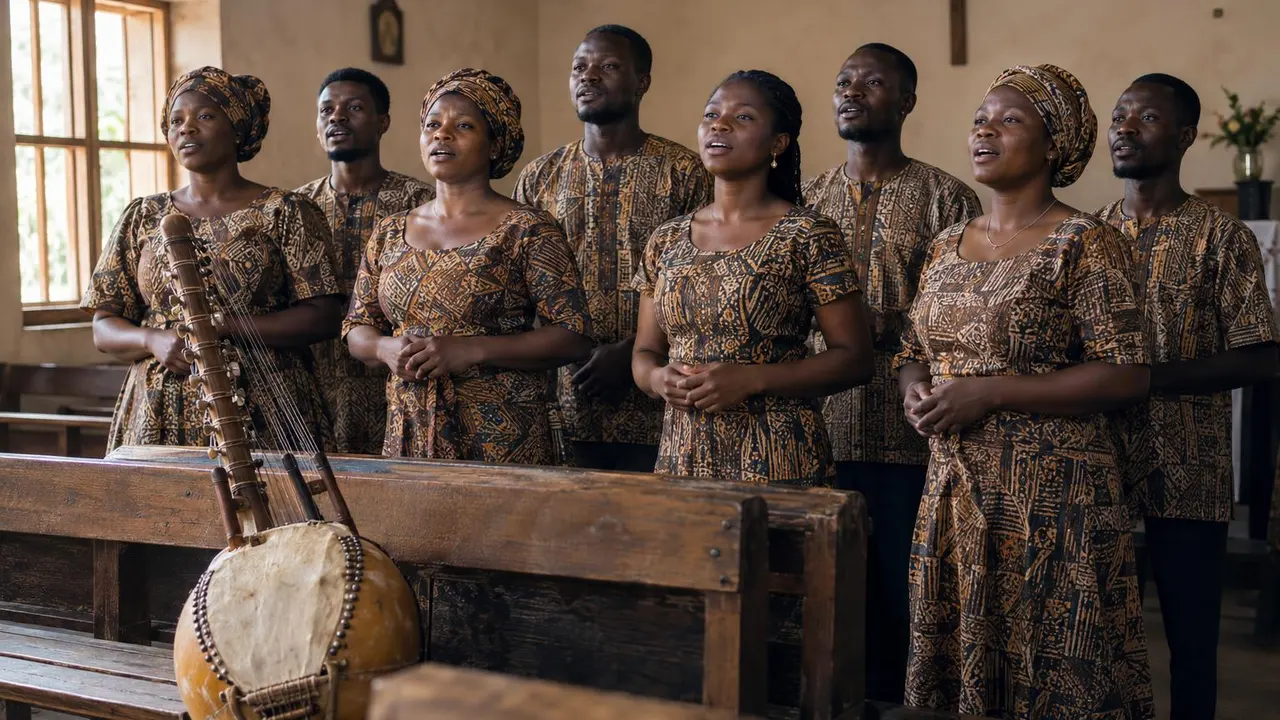
The acoustic kora appears as a thin, bright filament in the mix. Its arpeggios ripple beneath the choir, adding harmonic shimmer and brief melodic answers. The plucked attack and lingering overtones give the arrangement a gentle harp-like clarity that contrasts the roundness of the voices.
Piano, percussion and choir textures
Mellow piano supplies soft, full chords rather than ornate runs—a warm cushion under the vocal lines. Percussion is restrained: small, discrete strokes that articulate meter and create a light sense of forward motion. Above all, the choir dominates: warm, closely voiced harmonies that move in call-and-response shapes and sustained blocks of sound.
Fon language: how it sounds and carries meaning
Sung in Fon, the track places the language’s tonal contours at the center of the musical phrase. Fon’s pitch inflections become part of the melodic material; rising and falling syllables shape melody as much as words do. The choir’s delivery favors clarity and communal enunciation over solo ornamentation, so the language reads like layered chant—intimate but public, private prayer voiced by many.
The mood label attached to the piece calls it a gentle Fon prayer inviting inner peace, and that framing is audible: diction is measured, vowels held, consonants softened. The overall effect is speech shaped into sustained devotion rather than rapid text setting.
Region, tradition and placement
The recording is from Benin and sits within African spiritual and prayer music. In this context, choirs using local languages frequently carry collective expression—songs for consolation, blessing or quiet devotion. Here, the instrumentation leans toward minimal accompaniment: kora and piano interweave with the choir rather than compete, which places the vocal community at the centre of the sound world.
A video titled “Azɔ Mawu, Paix des cœurs | Fon African Gospel Song” accompanies the track; the published media and tagging present it within a calm, recovery-minded listening lane that foregrounds language and communal voice.
Energy and audience
The recording’s energy is steady and inward-facing. It suits private listening for calming or recovery, and also communal moments where a group voice carries reassurance. Because the arrangement privileges space—long vocal sustains, slow harmonic movement and light rhythmic marking—it rewards repeated listens: details in kora phrasing and the choir’s inner lines reveal themselves over time. Press play when you want a prayerful, measured sound that lets the human voice hold the room.
African Spiritual or Prayer
African Spiritual or Prayer sits among West African sacred vocal traditions; in this instance the piece is a Fon-language prayer from Benin. The style folds communal choir singing into a measured, devotional pulse rather than into dance or popular pop forms.
Origins and development
On the coast of Benin and across neighbouring West Africa, Christian devotional practices and local liturgical forms converged into choir-centered sacred music sung in local languages like Fon. Choirs became vehicles for communal prayer and therapeutic calm, taking Western hymn textures and blending them with regional melodic idioms and indigenous accompaniment.
Defining musical traits
Tempos are slow to moderate (around 60–80 BPM) to support meditative delivery; percussion stays understated and cyclical rather than driving. Vocals are collective: warm, homophonic choir textures with clear phrasing and measured breathing. Instrumentation typically supplies soft harmonic and plucked accents—piano or keyboards for sustained chords, plucked lutes or harps for patterning, and light hand percussion for gentle pulse.
How this track sits
The arrangement foregrounds warm choir voices while acoustic kora and a mellow piano thread gentle harmonic and arpeggiated support; percussion is subtle, framing rather than pushing the tempo. The overall mood reads as calm recovery, a prayerful, inward-facing performance.
Styles to explore next
West African Gospel; Traditional Fon sacred song