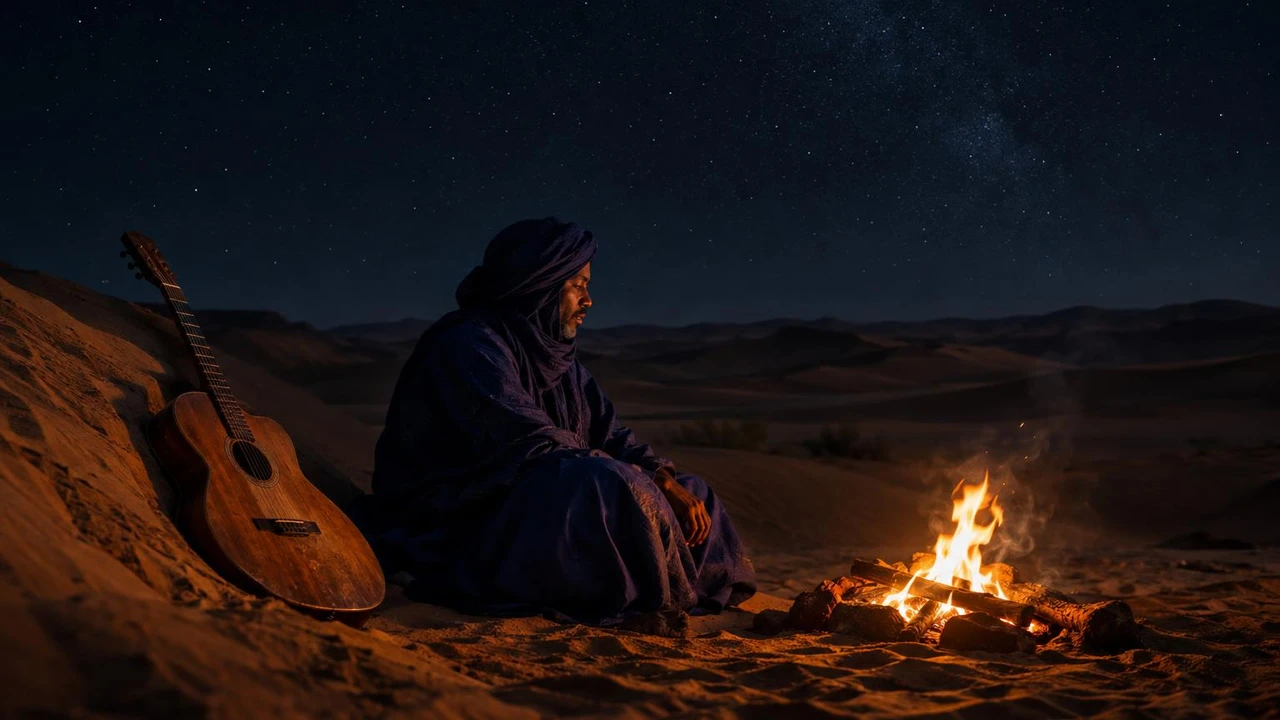
The steady 72 bpm and how it moves the body
The track sets a single tempo—72 beats per minute—as its organizing rule. That measured pace creates a steady arrival on each beat: not rushed, not dragging, but insistently regular. The effect on the body is specific. Rather than driving a fast dance, the beat invites a slow, insistent sway, a nodding that follows the space between one phrase and the next. It becomes a metronome for breathing with the music: where to stretch a note, when to suspend a vowel, when to let a guitar figure rest against the meter.
Small rhythmic shifts register loudly in this context. A delayed syllable or a slightly early string attack reads as intention, not timing error. The steady framework means movement is felt in micro-decisions—subtle tempo rubato, held notes, and the placement of ornaments—so the body listens as much for small tugging as for big gestures.
Instruments and how textures are used
Guitar as melodic counterpoint
Guitar arrives as a quiet, defining presence. It aligns with the measured beat and traces patterns that act as place-markers rather than propulsion. Single-line figures and repeated motifs give listeners an anchor: a melodic reference that complements the voice and makes the tempo tangible when words recede.
Soft electronics and sparse layering
Electronics here are minimal and atmospheric. They sit behind the voice and guitar, adding color and subtle sustain without crowding the space. These textures make the silences and pauses feel filled rather than empty; when they fade, the vocal lines and the steady beat are suddenly exposed, which heightens attention.
Language, phrasing and what it carries
Tamasheq lead lines dominate the melodic narrative, unspooling long phrases that take advantage of the wide temporal margins the tempo allows. Those extended lines let syllables hang and vowels open; phrasing becomes a primary expressive device. A suspended note or an elongated syllable signals feeling as much as any lyric.
French appears in concise refrains and functions like punctuation. Short, pointed statements about exile, memory and home mark sections of the track—brief landings against the ongoing Tamasheq sentences. The interaction between the two languages yields contrast: one voice that lingers and elaborates, another that states and returns.
Region and tradition shaping the sound
The use of Tamasheq places the music within Tuareg-speaking Sahel and Sahara traditions, where adapted guitars and vocal storytelling have long been central to musical life. In those contexts, the guitar frequently assumes a lead role, translated here into slow, patient melodic work that mirrors desert expanses: spacing matters as much as notes. The minimal electronics are a contemporary thread, discreetly woven into traditional forms to expand timbral possibilities without erasing the customary focus on voice and string.
Energy, context and who it reaches
This recording’s energy is contemplative and deliberate. Its slow tempo and restrained arrangement reward focused listening: repeated plays reveal small shifts, delayed entries, and the emotional weight of phrasing. It suits quiet rooms, late-night listening, or settings where memory and reflection are welcome companions. For listeners drawn to attentive detail—those who notice the space between beats and the meaning of a held vowel—this piece opens a deliberate space where exile, memory and home are heard as shaped by time itself.
Sahel Sahara Desert Blues
Sahel Sahara Desert Blues sits within the guitar-led song traditions of the Sahel and Sahara, where local languages and slow, linear phrasing shape meaning. This track uses that idiom’s spaciousness to make memory and exile audible through timing as much as melody.
Origins and development
The style grew from Sahel and Sahara musical practices that folded stringed instruments into local vocal forms. Electric and acoustic guitars became central in late 20th-century Sahelian performances, adapting regional modes and call-and-response patterns into repetitive, trance-friendly accompaniments.
Defining musical traits
Typical traits are steady, often slow tempos; guitar-driven ostinatos; patient, elongated vocal lines in Tamasheq or regional languages; sparse low-end bass and minimal percussion. Instrumentation commonly includes electric or acoustic guitar, bass, hand percussion or light drum patterns, and occasionally subtle electronics supporting vocals.
How this track fits
Here a single 72 bpm pulse is the organising rule. Long Tamasheq lead lines unfold across that measured grid while a concise French refrain punctuates the form. Guitar and soft electronics align with the beat rather than push it, and phrasing—delays, held vowels, small pauses—becomes the main expressive device.
Neighbouring styles to explore
Tuareg Blues; Gnawa